Night in the Hills. Immersive ball

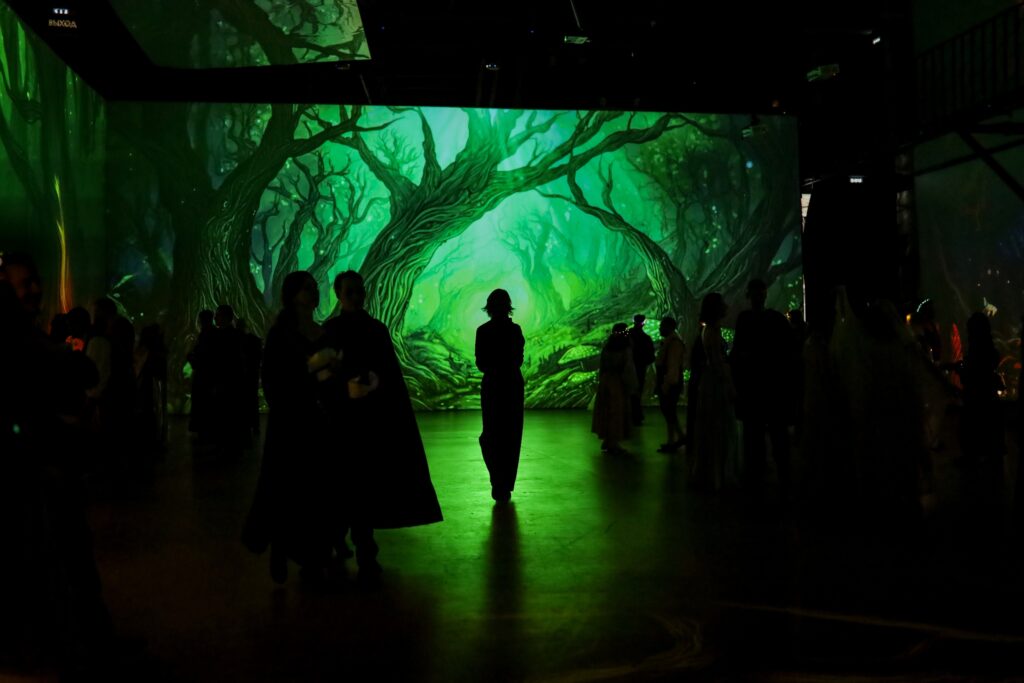
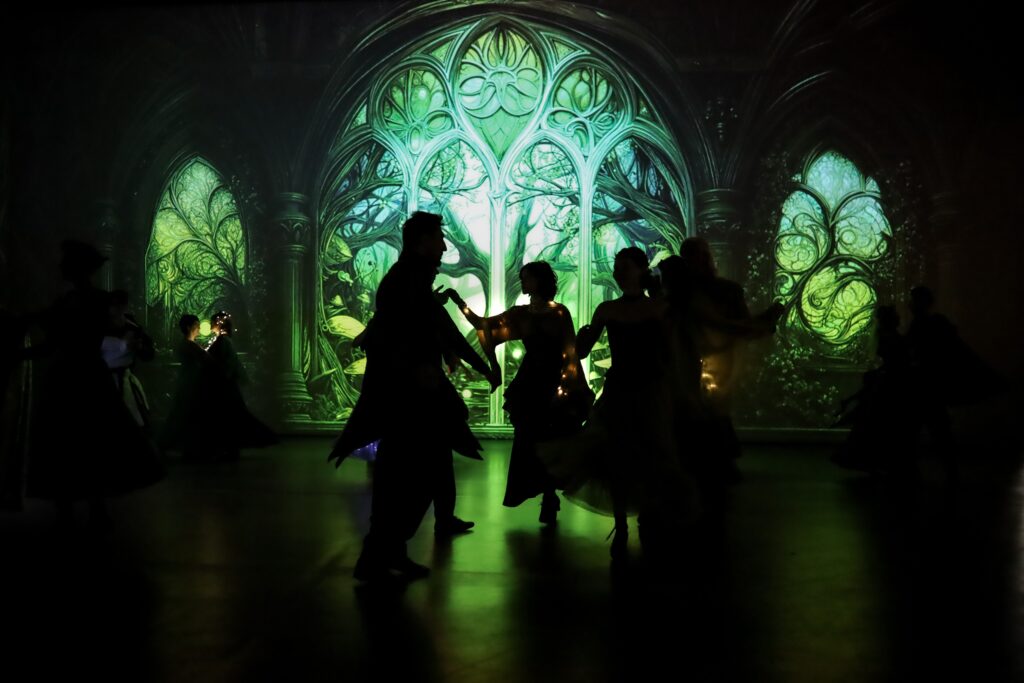
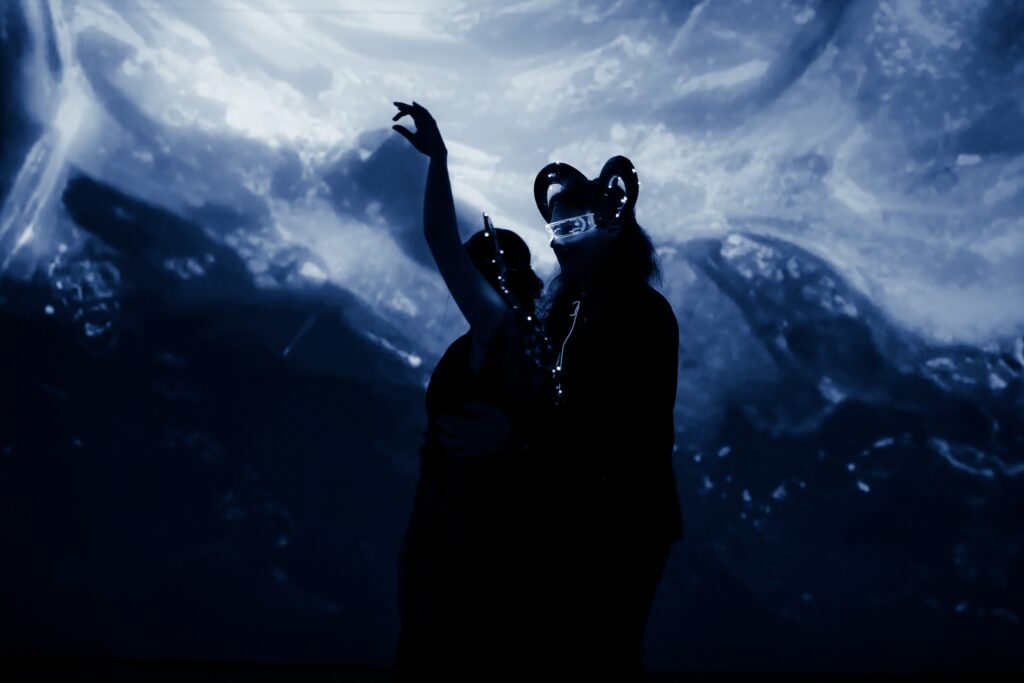
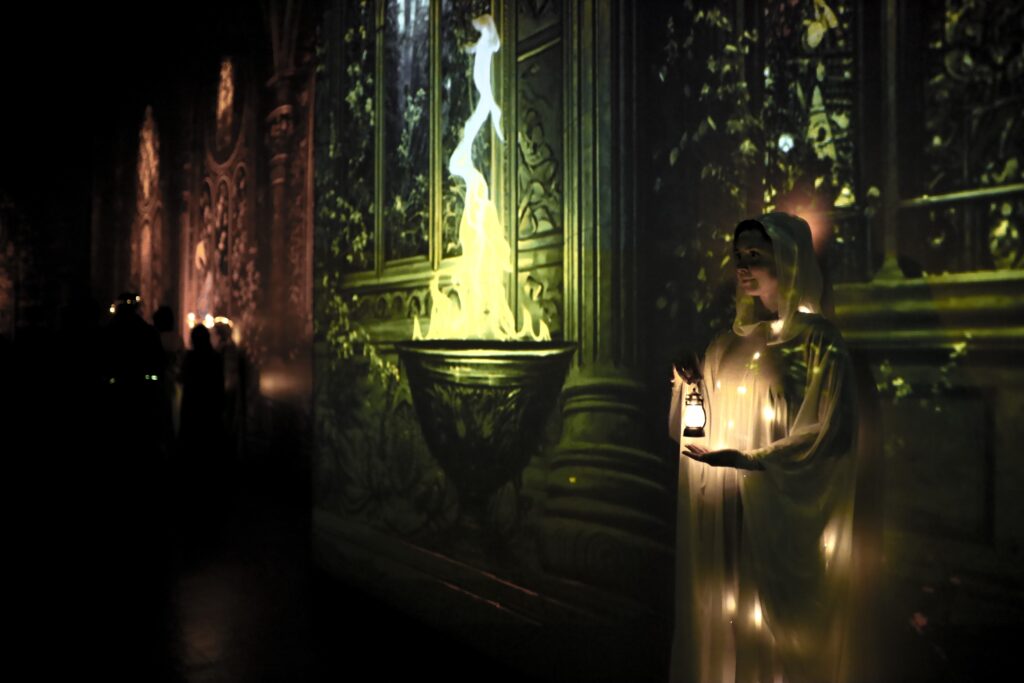
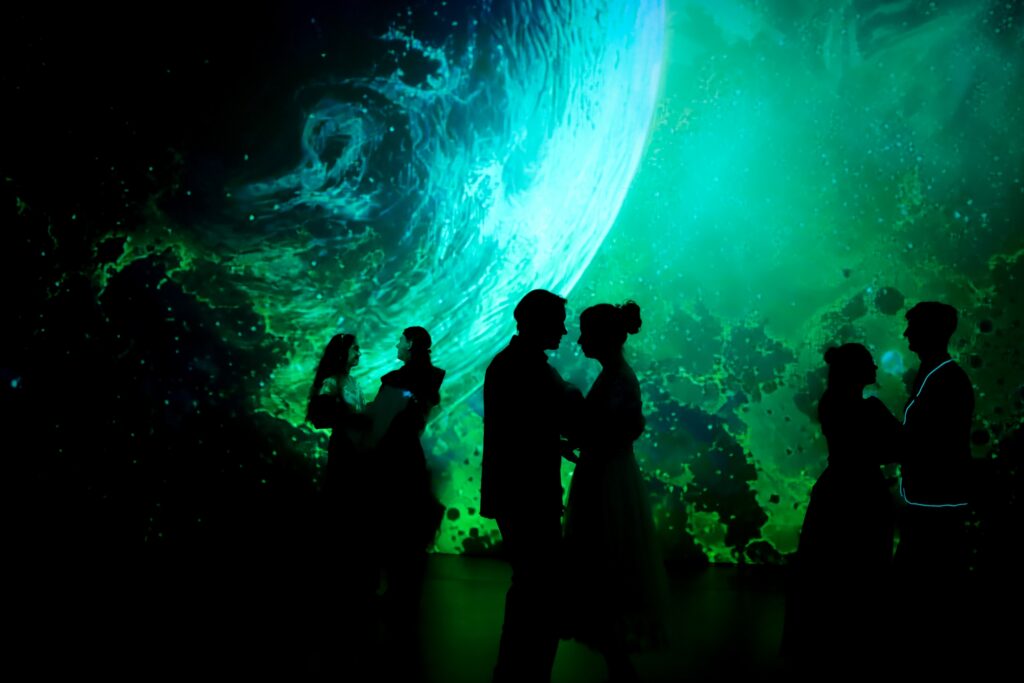
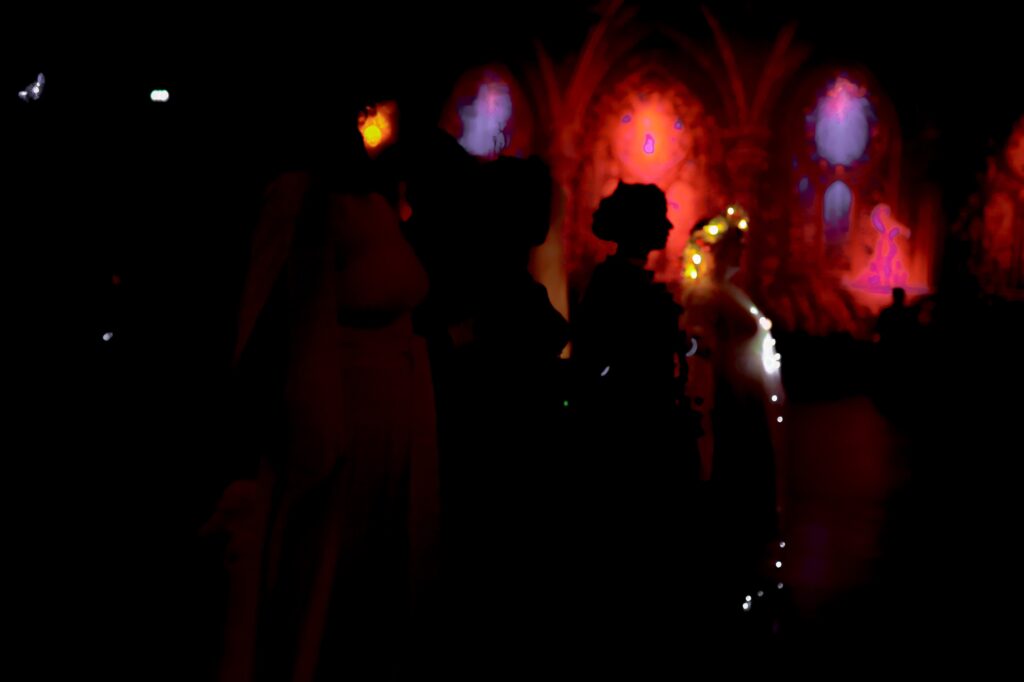
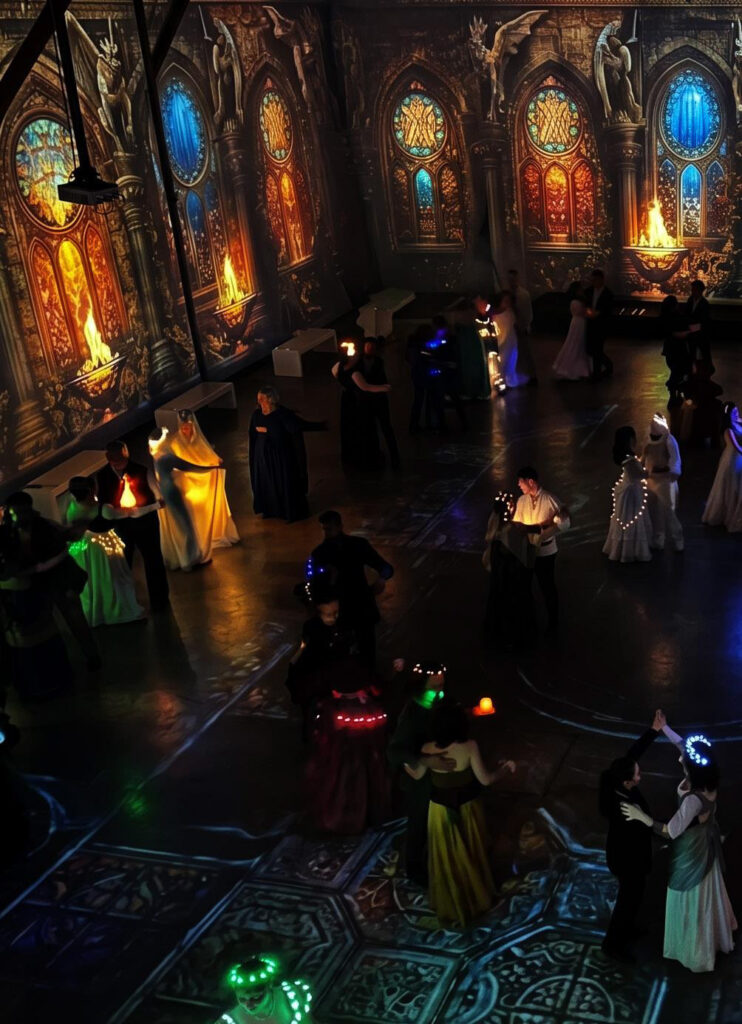
Night in the Hills is an immersive ball created as a four-hour visual journey through a continuously transforming space. Fourteen projectors turn the hall into a sequence of environments, from a luminous stained-glass interior through a fantastic forest to an open cosmic landscape. Projection, architecture, costumes and the movement of the dancers come together as…

Year2026
MediumImmersive projection environment / performative event
FormatImmersive ball with projection scenography
DurationApprox. 4 hours
Dimensions / Projection Format14 projectors
LocationArtplay, Moscow
AspectMulti-surface projection environment
ScreeningsArtplay, Moscow, 2026

About the Work

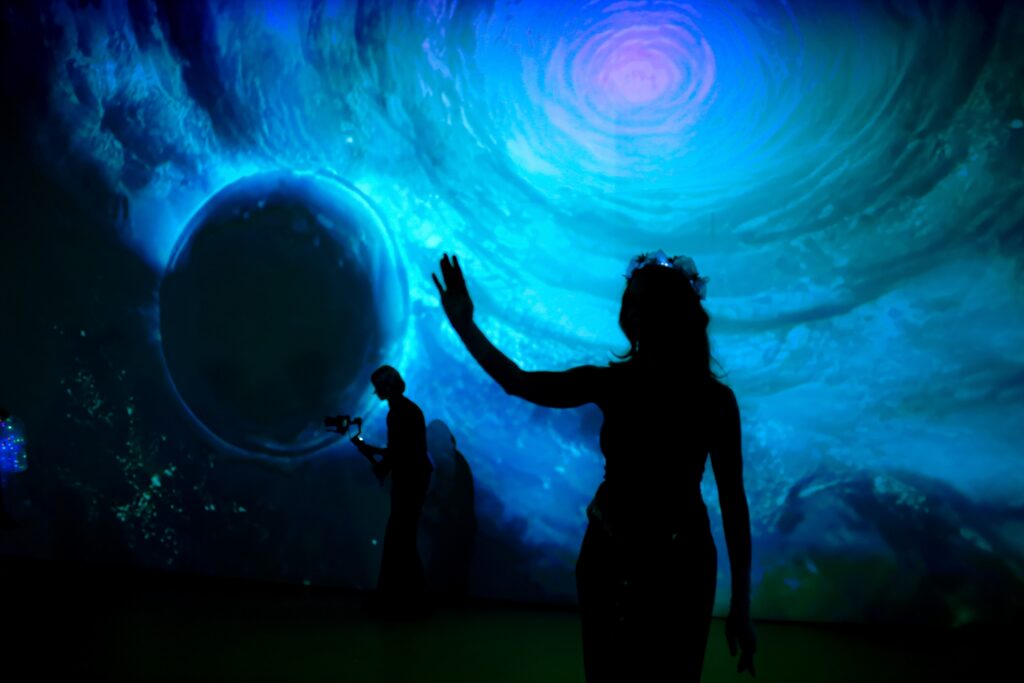
Night in the Hills is an immersive ball created as a four-hour visual journey through a continuously transforming space. Fourteen projectors turn the hall into a sequence of environments, from a luminous stained-glass interior through a fantastic forest to an open cosmic landscape.

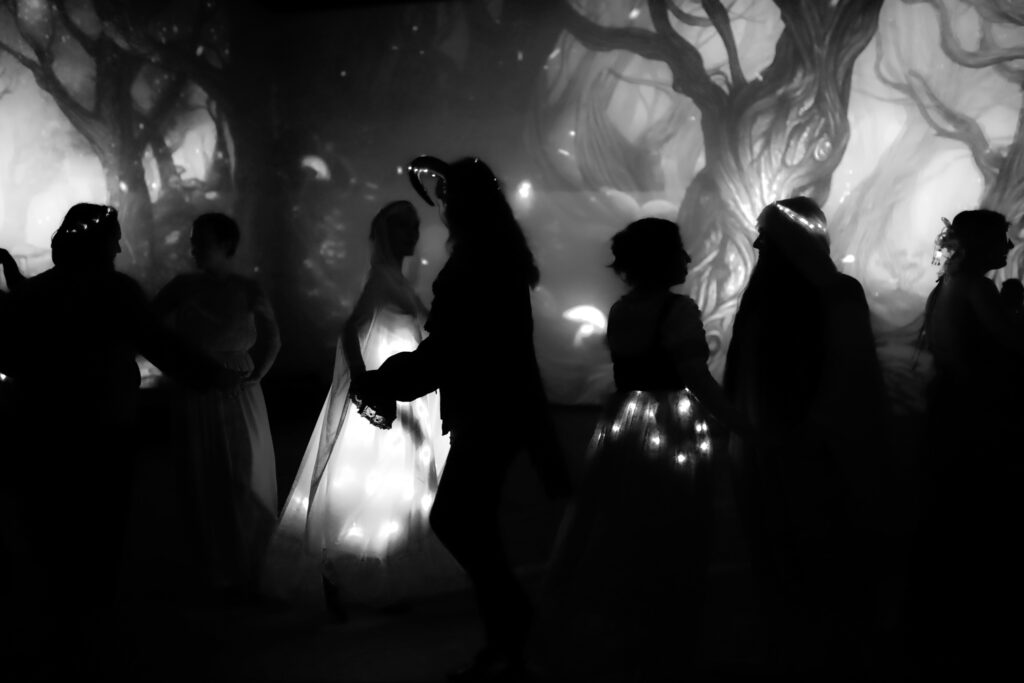
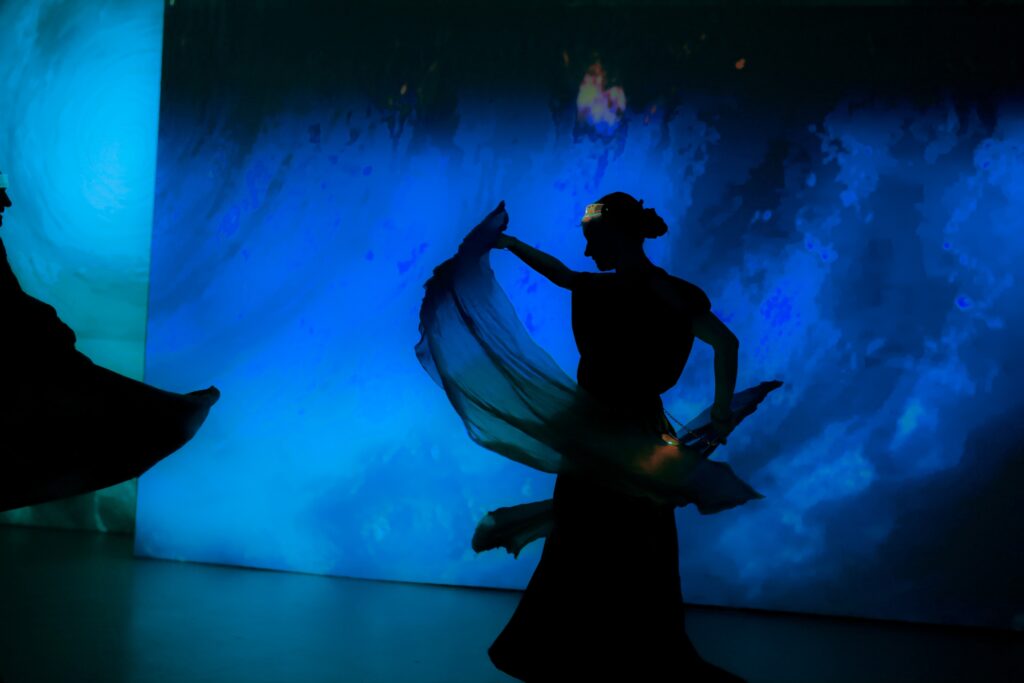
Projection, architecture, costumes and the movement of the dancers come together as parts of a single spatial composition, allowing the audience to experience the event from inside the changing visual world.

Concept

Night in the Hills is an immersive ball built around the idea of a space that changes together with the event taking place inside it. Instead of using projection as a decorative background, the project turns the architecture itself into a succession of imaginary environments through which the participants move during the evening.
The visual journey begins with a luminous stained-glass interior, gradually transforms into a fantastic forest, and eventually opens into a cosmic space. The dancers, costumes and movement of the audience become part of these changing compositions rather than remaining separate from the projected imagery.
The project was conceived as an attempt to blur the boundary between image, architecture and event: not to show another world to the audience, but to let the audience temporarily inhabit one.

Process / Development

The project was developed as a continuous transformation of the hall rather than as a sequence of isolated projection scenes. The visual material had to work across a long event, gradually changing the atmosphere without breaking the sense of a single environment.
The production was therefore built around several large visual states: the stained-glass interior, the forest, and the final cosmic space. Transitions between them were treated as part of the work itself, so that one world could slowly dissolve into another instead of simply being replaced.
Approximately four hours of visual content were prepared for the event and distributed across a system of fourteen projectors. The projected image had to remain coherent across multiple architectural surfaces while leaving enough visual space for the dancers, costumes and movement of the audience.
The visual environments were developed as separate compositions for different projection surfaces. Generative and AI-assisted imagery was used as source material, then adapted, extended and composited in After Effects to create coherent panoramic environments across the hall.
The final result emerged from balancing image, architecture, duration and live human presence rather than treating projection as a separate layer placed over the event.

Links

immersiveball.ru/